AI Search Optimization: How to Make Your Webapp Citable by AI
 Made Büro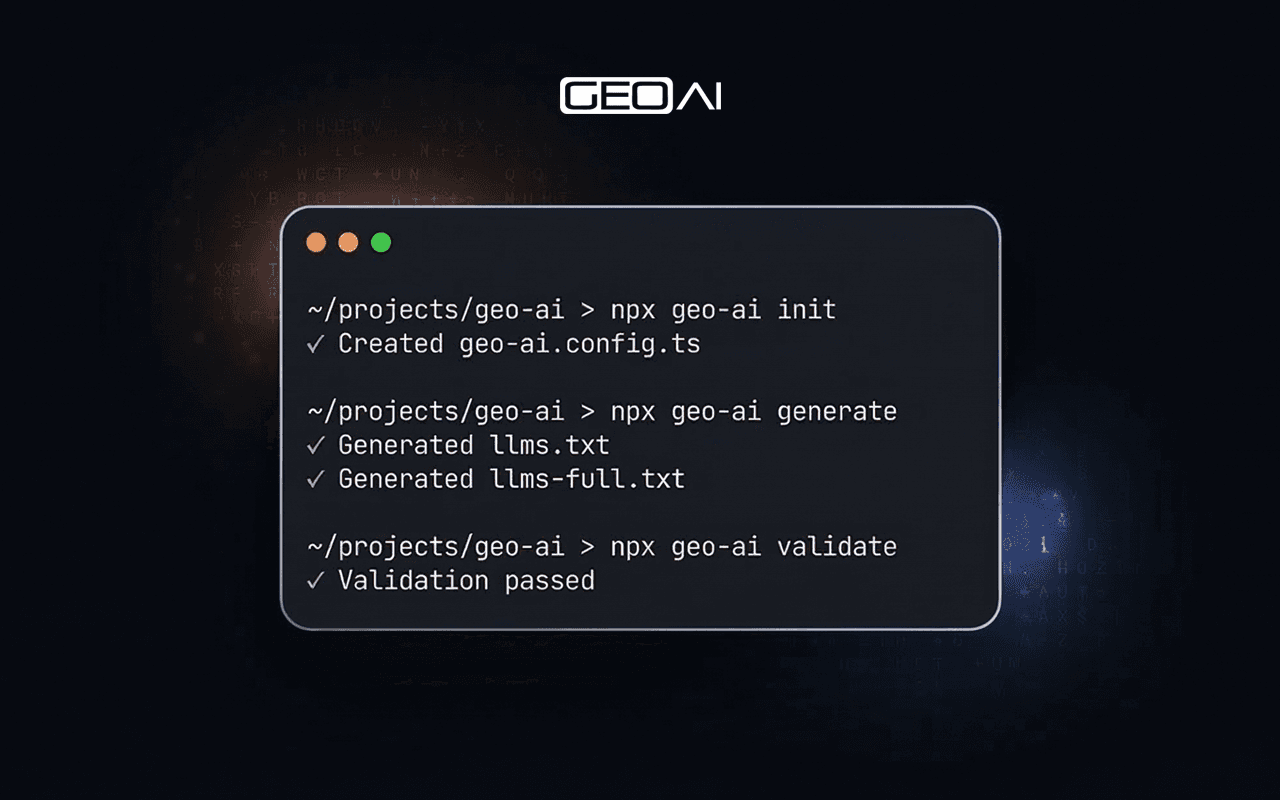
Something fundamental has changed in how people discover products online and most teams are still optimizing for the old model.
A growing number of users now begin with ChatGPT, Perplexity, Claude or Gemini instead of a traditional search results page. They ask full questions, compare options in natural language, and receive synthesized answers. In many cases, discovery now happens before the click.
That changes what visibility means.
If your website is not easy for AI systems to parse, trust, and reuse, your product becomes less likely to appear in the answers that increasingly shape attention and decision-making. Traditional SEO still matters, but on its own, it is no longer enough.
The Limit of Traditional SEO
SEO was built for a web of ranked links.
You optimize titles, structure pages around keywords, earn backlinks, and compete for position on a search results page. That model still matters, especially for Google, but AI-mediated search introduces a different layer.
LLM-powered interfaces do not simply return a list of pages. They synthesize, summarize, compare, and recommend. Instead of asking which page should rank first, they increasingly ask which sources are clear enough to extract from and credible enough to reference.
That creates a new kind of visibility gap.
A company may perform well in traditional search and still be largely absent from AI-generated answers. At the same time, a page with strong structure, specificity, and topical clarity may be cited even if it is not the top-ranked result for a competitive keyword.
The shift is not from SEO to something entirely separate. It is from ranking alone to ranking plus retrievability, clarity, and citation.
What Makes Content Citable
AI systems cannot recommend what they cannot clearly understand.
That is the core principle.
When AI models process a page, they respond especially well to a few qualities:
Clear structure
Content should be easy to navigate and easy to segment. Strong headings, logical sections, concise paragraphs, and a clear flow all help systems identify what a page is about and which parts are worth reusing.
A wall of branding language is difficult to extract from. A well-structured explanation is not.
Specificity
Generic claims are weak signals. Specific claims are reusable.
“There are tools to improve team productivity” says very little.
“Our platform helps product teams document decisions, organize research, and reduce handoff friction” is far easier to understand and cite.
The more concrete your language, the easier it becomes for an AI system to place your product in the right context.
Semantic signals
Structured data, clean information architecture, descriptive headings, and consistent terminology all make content easier to interpret.
This is not just about schema markup, though schema helps. It is also about giving your product language a machine-readable shape.
Topical depth
One page is rarely enough.
AI systems are more likely to trust a source that demonstrates sustained clarity across a topic: use cases, documentation, comparisons, workflows, definitions, implementation details, and supporting articles. Depth signals expertise far better than surface-level breadth.
Accuracy and freshness
AI systems often cross-check information across multiple sources. Outdated statistics, vague wording, or inconsistent claims weaken trust.
If your pages are old, incomplete, or imprecise, they become harder to rely on.
Why This Matters Especially for Web Apps
This problem is even more important for web apps than for content sites.
Most web apps are difficult to understand from the outside. Their landing pages are often built around broad positioning statements, while the real product value lives inside the interface. That creates a visibility problem: the product may be useful, but the public-facing content does not explain it clearly enough for AI systems to interpret.
In other words, many web apps are functional but not legible.
If an AI assistant is asked:
What tool helps marketing teams manage approval workflows?Which product is good for internal knowledge search?What app supports automated GEO analysis?What alternatives exist for lightweight team documentation?it can only recommend products whose capabilities are clearly expressed in public content.
If your site does not explain what the product does, who it is for, what problems it solves, how it compares, and where it fits, AI systems have very little to work with.
That is why web apps need more than polished landing pages. They need clear product language.
SEO and GEO Are Not the Same Thing
A useful term for this shift is GEO: Generative Engine Optimization.
SEO is primarily about ranking. GEO is about referenceability.
SEO helps your page get discovered in a list of results. GEO helps your content become usable inside AI-generated answers.
The two overlap, but they are not identical.
SEO asks: can this page compete?
GEO asks: can this page be understood, trusted, and cited?
That distinction matters more every year.
As more discovery happens through AI interfaces, visibility depends not only on whether people can find your site, but also on whether AI systems can confidently represent it.
What Teams Can Do Right Now
You do not need a full rebuild to improve AI visibility. But you do need to make your content easier to extract from and easier to trust.
1. Audit your key pages for clarity
Review your homepage, product pages, pricing, use-case pages, and documentation.
Ask a simple question: if an AI system had to answer “what does this product do?” using only this page, would the answer be accurate?
If the value proposition is buried in abstraction, rewrite it.
2. Replace vague positioning with concrete product language
Many websites are full of phrases like “streamline workflows” or “unlock smarter growth.” These may sound polished, but they communicate very little.
Write in a way that makes the product legible:
what it does,who it is for,when it is useful,what inputs it works with,what outcome it produces.3. Add structure that supports extraction
Use clear H2 and H3 headings. Break pages into focused sections. Lead with the most useful information instead of hiding it beneath generic intro copy.
AI systems are more likely to reuse content that is already well organized.
4. Implement structured data where relevant
Schema markup can help clarify entities, articles, products, organizations, FAQs, and other page types. It is not a magic layer, but it improves interpretability and supports a cleaner semantic foundation.
5. Build content depth around real use cases
Do not stop at one feature page.
Create supporting content around:
use cases,workflows,integrations,comparisons,implementation guides,FAQs,product definitions.A well-developed topic cluster makes your product easier to place and easier to trust.
6. Keep important pages current
Stale claims and outdated details weaken confidence. Review key pages regularly, especially if your product evolves quickly.
In AI-mediated discovery, freshness is not just a maintenance issue. It is part of credibility.
The Opportunity Right Now
We are in a transitional moment.
Most companies are still optimizing almost entirely for traditional search, while user behavior is already shifting toward AI-assisted discovery. That creates an opening for teams willing to adapt early.
This is not about chasing hype. It is about recognizing that discoverability is changing shape.
The next generation of search will not be defined only by who ranks. It will also be defined by who can be clearly understood, confidently referenced, and repeatedly recommended by AI systems.
The websites that perform best in that environment will not be the loudest. They will be the clearest.
At Made Büro, we have been exploring this shift closely and building tools around it through GEO AI, our open-source engine for generative engine optimization.